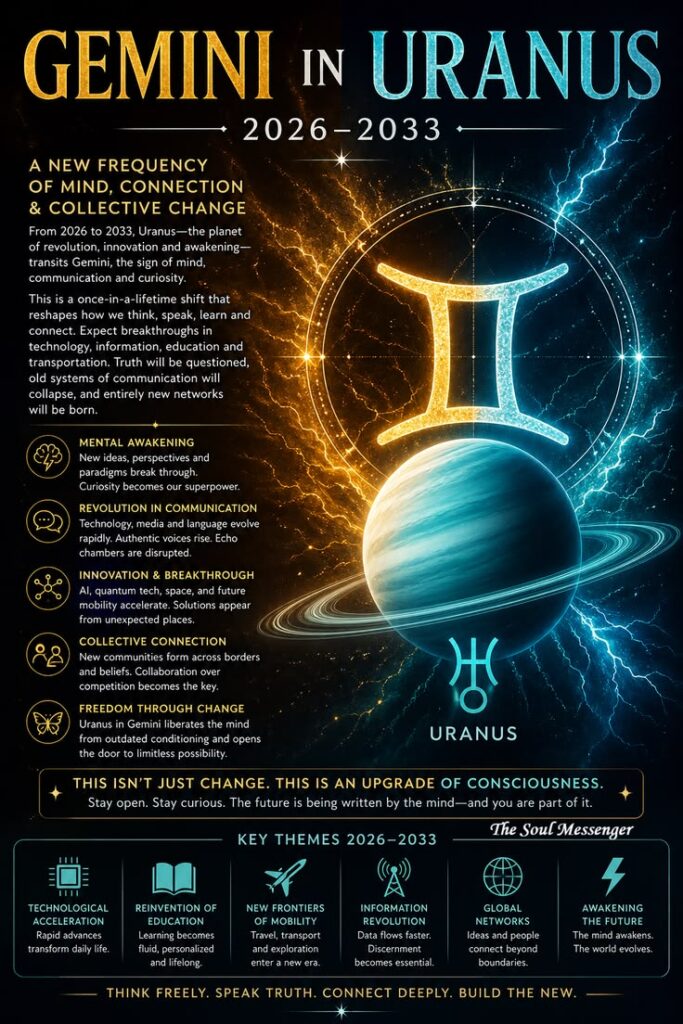
When Uranus moves into Gemini, change doesn’t come slowly—it comes through the mind, through communication, through the way people connect, learn, and make decisions. Uranus in Gemini doesn’t act all at once—it unfolds in phases, often repeating themes through direct and retrograde motion. These shifts are part of broader planetary movement cycles.
But this one is not a quiet shift.
It’s fast, unexpected, and often uncomfortable at first.
But it’s also one of the most mentally liberating cycles you can experience.
⚡ What Actually Changes During Uranus in Gemini
🧠 1. Your thinking speeds up—and so does everything else
You may notice:
- jumping between ideas quickly
- difficulty focusing on one task for long
- sudden insights that change your perspective instantly
👉 Old ways of thinking no longer work.
Real-life example:
You start reading something → it leads to another topic → then another → suddenly you’ve connected ideas you never saw before.
Your mind becomes faster—but less structured. What used to make sense may now feel limiting or outdated.
📱 2. Communication becomes constant and intense
- more messages, more information, more conversations
- shorter attention spans
- faster responses expected
👉 Communication becomes faster and more intense.
Real-life example:
- You check your phone more often
- Conversations move quickly and change direction fast
- You feel pressure to respond, stay updated, stay informed
It can feel like you’re always mentally engaged, even when you try to rest.
🌐 3. Information overload becomes real
You’re exposed to:
- conflicting opinions
- endless content
- different versions of “truth”
👉 Information overload and shifting perspectives become part of daily life.

Real-life example:
- You read multiple opinions on the same topic—each sounds convincing
- You feel unsure what to believe
- You spend more time consuming than processing
The challenge is no longer finding information—it’s filtering it.
🔄 4. Life direction can change suddenly
Uranus doesn’t ask for permission—it interrupts.
👉 Sudden changes in direction and decisions become more common.
Real-life examples:
- You suddenly lose interest in something you were committed to
- A random conversation leads to a new opportunity
- You make a quick decision that shifts your path
These changes may feel abrupt, but they often bring necessary redirection.
💥 5. Unexpected opportunities appear out of nowhere
Not all change is disruptive—some of it opens doors.
👉 Unexpected opportunities appear out of nowhere.
Real-life examples:
- Someone contacts you with an idea or collaboration
- You discover a new path you hadn’t considered
- A small action leads to a bigger opportunity
These moments can feel random—but they often lead somewhere meaningful.
⚡ 6. Old systems and routines stop working
- rigid schedules feel restrictive
- slow processes become frustrating
- traditional methods feel outdated
👉 Old ways of thinking no longer work, and neither do outdated systems.
Real-life example:
- You struggle to follow routines that once worked
- You prefer flexibility over structure
- You want to approach things differently, even if it feels uncertain
You’re being pushed to adapt—not repeat.
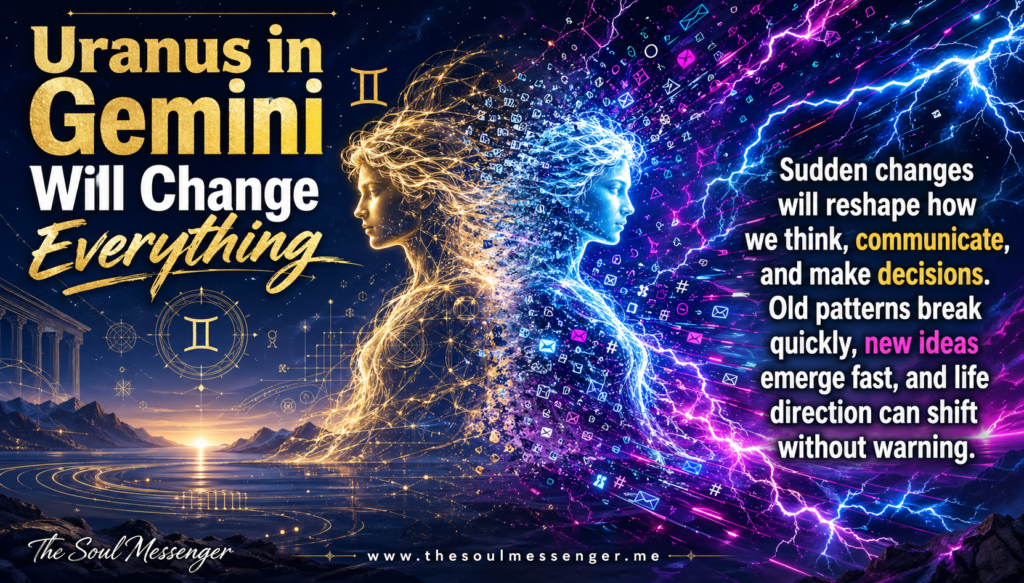
⚠️ The Main Challenges
🧩 Attention fragmentation
Starting many things, finishing fewer.
⚡ Mental overload
Too much input → not enough processing.
🔄 Instability in direction
Changing your mind faster than before.
💬 Miscommunication
Fast exchanges → more misunderstandings.
🛠️ Practical Ways to Handle This Period
🧠 1. Control your input (or it controls you)
- limit social media time
- choose a few reliable sources
- avoid constant scrolling
👉 This directly reduces information overload and shifting perspectives
✍️ 2. Externalize your thoughts
- write things down
- track ideas and decisions
- clear your mind regularly
👉 Helps stabilize when thinking becomes fast and scattered
🎯 3. Work in short, focused blocks
- 25–45 minutes focus
- short breaks in between
👉 Supports you when communication and mental activity are intense
🔁 4. Allow flexibility—but keep structure
- choose 1–3 priorities daily
- stay adaptable, not chaotic
👉 Helps manage sudden changes in direction and decisions
💬 5. Slow down communication
- pause before responding
- clarify instead of assuming
- avoid reacting instantly
👉 Prevents overwhelm when communication becomes faster and more intense
🌿 6. Ground your body daily
- walking
- breathing
- time offline
👉 Balances the effects of mental overload
💡 7. Don’t force clarity too early
- accept uncertainty
- take small steps
- adjust as you go
👉 Helps you navigate unexpected opportunities without pressure
🌌 The Hidden Opportunity
This period is not just chaotic—it’s powerful.
You can:
- think faster
- adapt quickly
- recognize patterns
- move in new directions
What feels unstable at first can become a major advantage.
⚡ Final Truth
Uranus in Gemini doesn’t just bring change—it rewires the structure of thinking and perception, opening the possibility of expanded awareness when consciously integrated.
It also reveals where changes are necessary:
1.Communication becomes faster and more intense.
2.Sudden changes in direction and decisions.
3. Information overload and shifting perspectives.
4. Unexpected opportunities appear out of nowhere.
5. Old ways of thinking no longer work
🌿 One simple rule to remember:
👉 Not everything deserves your attention. Filter what enters your mind, focus only on what matters, and stay flexible—because life is about to move faster than your plans.