If you often ask yourself, “Why do I feel disconnected from myself?”, you are in the right place. Feeling emotionally detached from yourself can be confusing and painful, but it is possible to reconnect with who you truly are. When you feel disconnected from yourself it is time look deep within.
You suddenly realize you no longer recognize who you are. You smile, work, talk to people, and continue with everyday life while secretly feeling emotionally empty and emotionally distant inside. It may feel as though you have lost touch with who you truly are, as if you are merely surviving instead of truly living.
To feel disconnected from yourself does not mean something is wrong with you. Often, it is a sign that you have been emotionally overwhelmed for too long, ignored your inner needs, or spent so much energy taking care of others that you slowly lost touch with your own emotions, desires, and identity.
The good news is that reconnecting with yourself is possible. Healing does not happen overnight, but small daily actions can gradually help you feel emotionally alive, grounded, and connected again.
What Does It Mean to Feel Disconnected From Yourself?
To feel disconnected from yourself means losing touch with your emotions, needs, intuition, identity, or sense of purpose. Many people describe it as feeling emotionally numb, mentally exhausted, or like they are watching life from the outside instead of truly experiencing it.
This emotional disconnection can happen after:
- chronic stress
- emotional trauma
- burnout
- anxiety or depression
- people-pleasing
- toxic relationships
- grief or heartbreak
- constantly ignoring your own needs
- living according to others’ expectations
Sometimes disconnection develops slowly over time. You may become so focused on responsibilities, survival, or pleasing others that you stop listening to your inner voice altogether.
Signs You Feel Disconnected From Yourself
Many people struggle to recognize emotional disconnection because they assume they are simply tired or unmotivated. Here are some common signs you may feel disconnected from yourself:
Emotional Signs
- Feeling emotionally numb
- Struggling to identify your feelings
- Feeling empty inside
- Crying unexpectedly or feeling emotionally overwhelmed
- Feeling detached from your own life
- Losing excitement about things you once enjoyed
- Feeling emotionally exhausted all the time
Mental Signs
- Constant overthinking
- Difficulty concentrating
- Feeling mentally “foggy”
- Negative self-talk
- Feeling lost or confused about who you are
- Lack of motivation
- Feeling disconnected from your goals or dreams
Physical Signs
- Constant fatigue
- Trouble sleeping
- Feeling tense or restless
- Ignoring your body’s needs
- Emotional eating or loss of appetite
- Spending too much time scrolling on your phone to escape emotions
Behavioral Signs
- Isolating yourself from others
- Avoiding deep conversations
- Pretending you are okay when you are not
- Living on autopilot
- People-pleasing constantly
- Losing interest in hobbies or passions
- Feeling disconnected even around people you love
If you recognize yourself in many of these signs, you are not alone. Emotional disconnection is more common than many people realize.
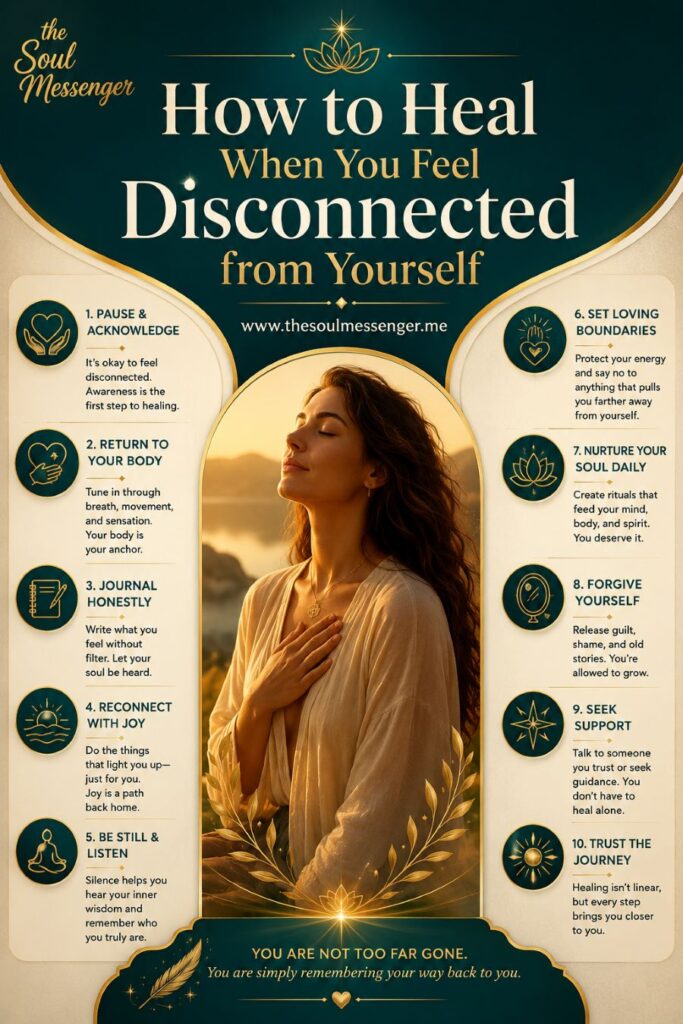
How to Heal When You Feel Disconnected From Yourself
Healing begins by slowly rebuilding your relationship with yourself. You do not need to completely change your life overnight. Small consistent habits can help you reconnect emotionally and mentally.
Start Spending Quiet Time With Yourself
One of the biggest reasons people feel disconnected from themselves is because they rarely slow down long enough to listen to their inner world.
Try spending at least 10–15 minutes daily without distractions:
- no phone
- no social media
- no television
- no multitasking
Sit quietly, journal, walk outside, or simply breathe deeply. Silence helps you reconnect with your thoughts and emotions.
Reconnect With Your Emotions
Many people suppress emotions for so long that they stop recognizing what they truly feel.
Ask yourself daily:
- What am I feeling right now?
- What do I truly need today?
- What has been emotionally draining me?
- What brings me peace?
Journaling can be especially helpful when you feel disconnected from yourself because writing often reveals emotions you were unconsciously avoiding.
Take Care of Your Physical Body
Emotional healing and physical well-being are deeply connected. When you neglect your body, emotional disconnection often becomes stronger.
Simple daily habits can make a huge difference:
- drink enough water
- sleep consistently
- move your body regularly
- spend time outdoors
- nourish yourself with healthy meals
- stretch or practice deep breathing
Even a short daily walk can help you feel more grounded and emotionally present.
Reduce Emotional Overload
Sometimes people feel disconnected from themselves because their minds are constantly overstimulated.
Pay attention to what emotionally drains you:
- excessive social media
- toxic people
- negative news
- constant comparison
- overworking
- unrealistic expectations
Protecting your mental space is not selfish. It is necessary for emotional healing.
Stop Ignoring Your Own Needs
Many emotionally disconnected people spend years prioritizing everyone else while neglecting themselves.
Start asking:
- What do I need emotionally?
- What boundaries do I need?
- What activities genuinely make me happy?
- What am I forcing myself to tolerate?
Reconnecting with yourself often requires learning to value your own emotional needs again.
Practice Grounding Techniques Daily
Grounding techniques help bring your attention back to the present moment when you feel emotionally detached.
Helpful grounding practices include:
- deep breathing
- meditation
- walking barefoot on grass
- listening to calming music
- focusing on physical sensations
- mindfulness exercises
- gentle stretching or yoga
These practices help calm the nervous system and create emotional stability.
Do Things That Make You Feel Alive Again
When you feel disconnected from yourself, life can become emotionally flat and repetitive.
Think about activities that once made you feel inspired, peaceful, creative, or joyful:
- drawing
- music
- dancing
- writing
- reading
- nature
- photography
- cooking
- creating something meaningful
You do not need to be perfect at these activities. The goal is not productivity — it is reconnection.
Learn to Be Honest With Yourself
Healing requires honesty. Sometimes emotional disconnection happens because people suppress their truth for too long.
You may need to admit:
- you are emotionally exhausted
- you are unhappy in certain situations
- you have ignored your feelings
- you need change
- you need support
Self-awareness is uncomfortable at first, but it is also the beginning of healing.
Build Small Daily Routines That Support You
When life feels emotionally chaotic, simple routines create stability and reconnection.
Try creating small rituals such as:
- morning journaling
- evening gratitude practice
- daily walks
- reading before bed
- mindful breathing
- drinking tea quietly in the morning
Small consistent actions help rebuild emotional safety within yourself.
Allow Yourself Time to Heal
If you feel disconnected from yourself, do not pressure yourself to “fix” everything immediately. Emotional reconnection is a gradual process.
Some days you may feel hopeful. Other days you may feel lost again. That is normal.
Healing is not about becoming a completely different person. It is about returning to the parts of yourself that stress, pain, exhaustion, or emotional wounds caused you to forget.
The more compassion, patience, and care you give yourself, the easier it becomes to reconnect with who you truly are.
Over time, you may begin to notice small but meaningful changes:
- feeling emotionally lighter
- recognizing your feelings more clearly
- enjoying simple moments again
- feeling calmer inside
- reconnecting with your passions
- feeling more like yourself again
And that journey back to yourself is one of the most important forms of healing you can experience.