Emotional rejection can leave a deep wound that quietly follows you through everyday life. One unanswered message, one cold reaction, one breakup, or one moment of being excluded can suddenly trigger the painful feeling of feeling worthless. Many people experience this in silence, questioning their value, attractiveness, intelligence, or importance simply because someone else withdrew affection, attention, or approval.
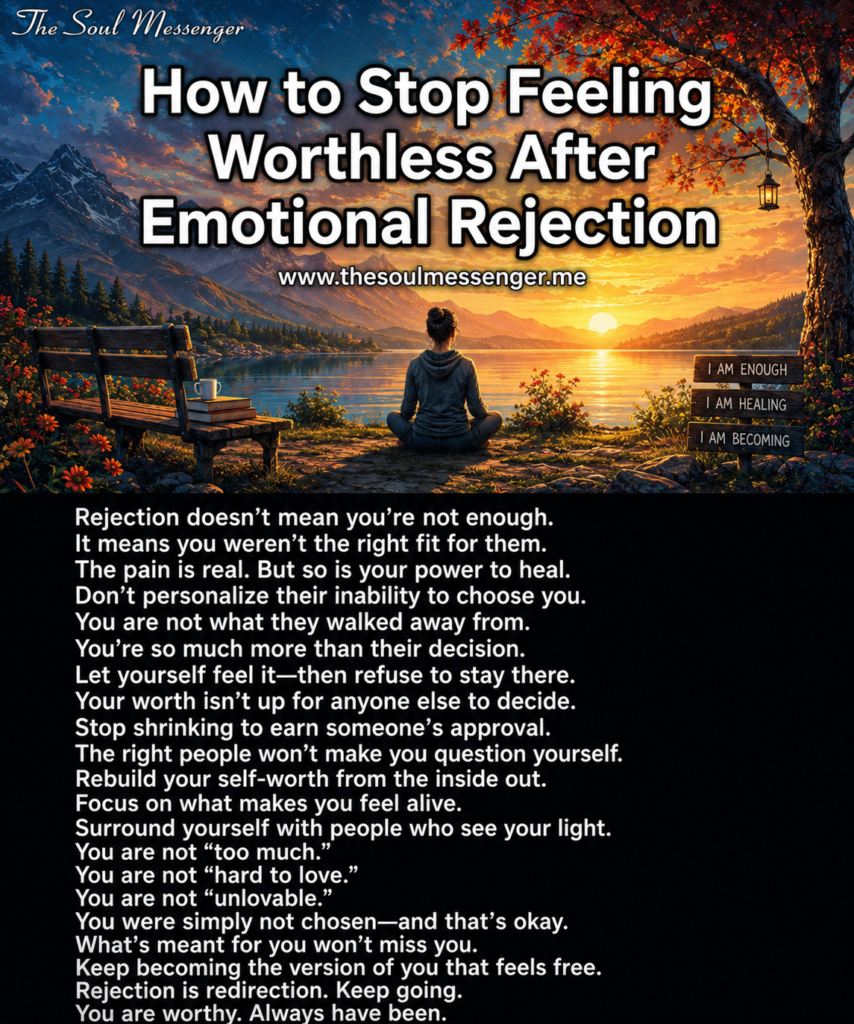
The truth is that emotional rejection does not only hurt the heart — it often activates old emotional memories connected to abandonment, criticism, neglect, or not feeling good enough. That is why rejection can feel much bigger than the situation itself. A person may logically know they still have value, yet emotionally feel broken, invisible, or deeply inadequate.
You are not alone if you have ever felt devastated because someone ignored you, stopped choosing you, criticized you, replaced you, or emotionally disconnected from you. These experiences can create an intense inner narrative that says:
- “I am not lovable.”
- “I am not enough.”
- “Something must be wrong with me.”
- “If they rejected me, I must be worthless.”
But emotional rejection is not proof of your worth. It is often a reflection of emotional compatibility, emotional maturity, personal wounds, timing, expectations, or circumstances — not your value as a human being.
This article will help you understand why rejection hurts so deeply, what causes the feeling of worthlessness, and practical ways to emotionally heal and rebuild your self-worth.
Why Emotional Rejection Hurts So Much
Human beings are emotionally wired for connection. Feeling accepted, valued, understood, and emotionally safe is deeply connected to psychological well-being. Rejection activates the brain in ways similar to physical pain, which is why emotional rejection can feel physically heavy in the chest, stomach, or nervous system.
Everyday emotional rejection can happen in many forms:
- A partner becoming emotionally distant
- Friends excluding you from plans
- Someone leaving your message on “seen”
- A family member constantly criticizing you
- Being ignored in conversations
- Not receiving affection from someone you love
- A breakup or divorce
- Not being chosen for a job opportunity
- Feeling emotionally unseen in relationships
For some people, these moments pass naturally. But for others, they trigger overwhelming emotional pain and intense feelings of inadequacy. The reason often lies deeper than the present moment.
Feeling Worthless and Low Self-Esteem: The Hidden Root Cause
Many people think rejection creates worthlessness. In reality, rejection usually activates feelings that already exist beneath the surface.
If someone already carries hidden beliefs such as:
- “I am not good enough”
- “I need validation to feel valuable”
- “I must earn love”
- “I will be abandoned”
- “I am easy to replace”
then emotional rejection reinforces these emotional wounds.
Low self-esteem often develops gradually through life experiences such as:
Childhood Emotional Neglect
A child who constantly felt unseen, criticized, emotionally dismissed, or compared to others may unconsciously grow up believing their value depends on performance or approval. This is often why so many adults continue to struggle with feeling worthless later in life.
Conditional Love
Some people only received love when they achieved something, behaved perfectly, or pleased others. As adults, rejection feels devastating because love became connected to external validation.
Past Betrayal or Abandonment
Painful breakups, betrayal, bullying, or emotional abandonment can leave emotional scars that remain sensitive long after the event has passed.
Nervous System Conditioning
Repeated emotional pain can train the nervous system to react strongly to rejection. Even small situations can trigger fear, panic, shame, or emotional collapse.
This is why healing rejection is not only about “thinking positively.” True healing involves emotional awareness, nervous system regulation, self-worth rebuilding, and changing deeply rooted beliefs.
Feeling Worthless After Rejection: How to Rebuild Your Self-Worth
Healing emotional rejection begins when you stop measuring your worth through someone else’s ability to choose, validate, or emotionally understand you.
Separate Rejection From Identity
One of the most important shifts is understanding this:
Someone rejecting you does not define your value.
People reject others for countless reasons:
- Emotional unavailability
- Fear of intimacy
- Different needs or life directions
- Personal struggles
- Lack of emotional maturity
- Timing
- Incompatibility
Yet many people internalize rejection as proof of personal failure.
Instead of saying:
- “I was rejected because I am worthless,”
begin practicing:
- “This experience hurt me, but it does not define my worth.”
That small emotional shift creates space for healing.
Stop Seeking Constant External Validation
Many people unknowingly build their self-worth around:
- attention,
- relationships,
- approval,
- compliments,
- being chosen,
- or being needed.
When those disappear, their identity collapses.
Healthy self-worth comes from developing an internal relationship with yourself rather than depending entirely on external reassurance.
Ask yourself:
- Who am I beyond other people’s opinions?
- What qualities do I genuinely value in myself?
- What makes me meaningful beyond being accepted?
Real confidence grows when your worth is no longer dependent on emotional approval.
Learn to Self-Validate
After rejection, people often desperately search for reassurance from others. While support is helpful, emotional healing also requires learning how to emotionally support yourself.
Instead of attacking yourself after rejection:
- “I’m pathetic.”
- “Nobody wants me.”
- “I always ruin everything.”
practice compassionate self-talk:
- “This hurts, and my feelings are valid.”
- “Rejection does not erase my value.”
- “I am still worthy of love and respect.”
This may feel unnatural at first, especially if you are used to harsh self-criticism. But emotional healing begins when your inner voice becomes safer and kinder.
Practical Ways to Stop Feeling Worthless
Regulate Your Nervous System
Emotional rejection often activates survival responses inside the nervous system. You may experience:
- anxiety,
- obsessive thoughts,
- emotional shutdown,
- panic,
- overthinking,
- or emotional numbness.
Grounding practices help calm the nervous system:
- Deep breathing
- Walking in nature
- Physical movement
- Meditation
- Journaling emotions
- Reducing overstimulation
- Spending time with emotionally safe people
When the nervous system feels safer, emotional pain becomes easier to process.
Stop Idealizing the Person Who Rejected You
After rejection, many people unconsciously place the other person on a pedestal. They begin believing:
- “They were perfect.”
- “I lost the only person who could love me.”
- “Nobody else will choose me.”
This mindset intensifies feelings of worthlessness.
Try to see the situation more realistically. A relationship where you constantly feel unseen, anxious, emotionally unsafe, or unworthy is not emotional fulfillment.
Healthy relationships do not require abandoning your self-worth.
Reconnect With Your Identity
Many people lose themselves emotionally inside relationships. Their entire focus becomes being loved, accepted, or chosen.
Healing involves reconnecting with:
- personal passions,
- creativity,
- purpose,
- friendships,
- spirituality,
- growth,
- and emotional authenticity.
Ask yourself:
- What makes me feel alive?
- What parts of myself have I neglected?
- What brings me peace, joy, or meaning?
Your identity is much bigger than one rejection.
Feeling Worthless Can Lead to Emotional Dependency
When self-worth is fragile, emotional rejection can create dependency patterns where a person constantly seeks reassurance, validation, or emotional rescue from others.
This often looks like:
- over-texting,
- people-pleasing,
- fear of abandonment,
- difficulty being alone,
- tolerating unhealthy treatment,
- or obsessing over someone’s attention.
The deeper issue is usually fear of losing connection because connection became tied to survival and self-worth.
Healing emotional dependency means learning:
- emotional boundaries,
- self-respect,
- emotional regulation,
- and inner emotional security.
You stop chasing people who cannot emotionally meet you and begin choosing relationships that feel emotionally safe, mutual, and respectful.
Feeling Worthless Often Comes From Emotional Conditioning
Many people believe their thoughts are objective truth. But often, the feeling of worthlessness is emotional conditioning created over years of painful experiences.
A person rejected repeatedly may unconsciously train themselves to expect abandonment everywhere.
But healing is possible when you begin questioning old emotional narratives:
- “Am I truly worthless, or am I emotionally wounded?”
- “Is rejection proof of my value, or proof of human complexity?”
- “What if my worth exists independently of who chooses me?”
These questions slowly create emotional freedom.
Healing Emotional Rejection Takes Time
There is no instant way to stop emotional pain completely. Healing rejection is a gradual process of rebuilding emotional safety within yourself.
Some days you may still feel sadness, anger, loneliness, or insecurity. That does not mean you are failing. Emotional healing happens layer by layer.
What matters is that you stop defining yourself through rejection.
Your worth is not determined by:
- who left,
- who ignored you,
- who failed to understand you,
- or who could not love you properly.
Your worth exists beneath the pain, beneath the conditioning, and beneath the emotional wounds created by past experiences.
The more you reconnect with your authentic self, emotional truth, inner peace, self-awareness and self-respect, the less power rejection will have over your identity and you will stop feeling worthless.
And eventually, instead of asking:
- “Why was I rejected?”
you may begin asking:
- “Why did I ever believe rejection defined my worth?”