Awakening Begins Beneath the Surface
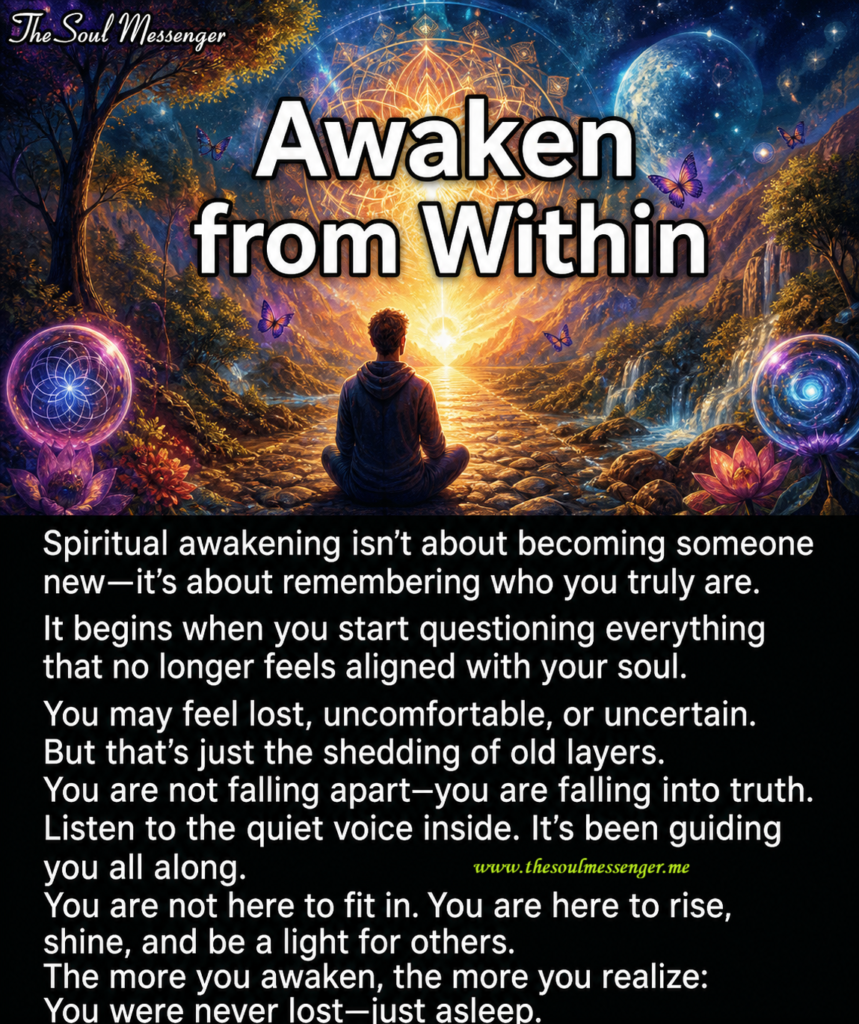
Awakening is not about becoming someone new. It is about remembering who you were before fear, conditioning, social expectations, emotional wounds, and survival patterns shaped your identity. Many people spend years trying to improve themselves without realizing that the deepest transformation comes from uncovering the truth already hidden within them.
At the core of every human being exists an authentic self that is naturally aware, intuitive, emotionally intelligent, and deeply connected to life itself. Yet modern life often pulls people away from this inner truth. Constant distractions, pressure to perform, emotional suppression, comparison, and overstimulation can disconnect people from their real identity.
From both spiritual and scientific perspectives, self-discovery happens when the mind becomes quiet enough to observe the deeper layers beneath automatic thinking. Neuroscience shows that repeated thoughts and emotional patterns create neural pathways that shape perception and identity. Spiritual teachings across many traditions describe a similar process: the false self is constructed through attachment, fear, and unconscious conditioning.
True Awakening happens when you begin to question those layers and reconnect with the deeper awareness underneath them.
This process is not instant. It unfolds gradually through self-observation, emotional healing, inner stillness, conscious habits, and spiritual awareness. The more honestly you look within yourself, the more clearly you begin to recognize what is real and what was simply learned behavior.
Awakening and the Difference Between the Ego and the Authentic Self
One of the biggest obstacles to self-discovery is confusing the ego with the authentic self.
The ego is not inherently bad. It is the psychological structure created to help people survive, adapt socially, and protect themselves emotionally. However, many people become completely identified with this constructed identity. They define themselves by achievements, appearance, status, trauma, opinions, relationships, or external validation.
The authentic self exists beneath all of that.
Spiritually, many traditions describe this deeper self as consciousness, soul awareness, higher self, or inner essence. Scientifically, mindfulness research shows that people who develop self-awareness become less reactive and more capable of observing thoughts instead of automatically becoming them.
This distinction changes everything.
Instead of asking:
- “How do I become enough?”
- “How do I prove myself?”
- “How do I fit in?”
You begin asking:
- “Who am I beneath fear?”
- “What feels genuinely true to me?”
- “What parts of me were conditioned by survival?”
These questions open the doorway to Awakening because they shift attention inward instead of outward.
Practical Awakening Practices That Reveal Your Core Truth
Discovering who you really are requires more than intellectual understanding. It requires consistent inner practices that help remove emotional noise and unconscious conditioning.
Deep Self-Observation
Most people move through life automatically. They react without awareness, repeat emotional patterns, and absorb beliefs from others without questioning them.
Self-observation changes this.
Spend time noticing:
- What triggers emotional reactions
- What drains your energy
- What repeatedly creates inner conflict
- Which environments make you feel disconnected
- Which activities make you feel fully alive
Observe yourself without judgment. Awareness itself begins transforming unconscious patterns.
One powerful method is reflective journaling. Instead of writing only about events, write about emotional patterns and internal reactions. Ask yourself:
- “What emotion appears most often in my life?”
- “What fear controls my decisions?”
- “When do I feel most authentic?”
- “What parts of myself do I hide?”
Over time, these reflections reveal the truth beneath the surface identity.
Silence and Stillness
Modern life overloads the nervous system with information, stimulation, and constant mental activity. Inner truth becomes difficult to hear when the mind is always distracted.
Silence is one of the most powerful spiritual tools because it allows deeper awareness to emerge.
Meditation, mindful breathing, time in nature, prayer, and moments without technology help calm mental noise. Scientific studies show that mindfulness practices reduce stress activity in the brain while increasing emotional regulation and self-awareness.
You do not need hours of meditation to begin. Even 10 to 15 minutes daily of intentional stillness can create noticeable shifts.
During silence, suppressed emotions may surface. Old memories may arise. Hidden fears may become visible. This is not failure — it is part of the healing process.
The deeper self often becomes visible only after emotional noise settles.
Awakening and Emotional Healing
Many people cannot discover their true identity because unresolved emotional pain distorts how they see themselves.
Childhood wounds, rejection, criticism, shame, abandonment, and trauma can create false beliefs such as:
- “I am not enough.”
- “I must earn love.”
- “I must hide my true self.”
- “My emotions are dangerous.”
These beliefs become internal programs that shape identity unconsciously.
Healing does not mean pretending pain never existed. It means becoming aware of emotional patterns without allowing them to define your identity forever.
Scientifically, emotional healing changes neural pathways through neuroplasticity. Spiritually, healing restores connection between the mind, body, and deeper consciousness.
Helpful healing practices include:
- Breathwork
- Somatic awareness
- Therapy
- Emotional release journaling
- Inner child work
- Forgiveness practices
- Conscious self-compassion
Many people experience major Awakening shifts when they stop fighting their emotions and begin understanding them.
Body and Nervous System
The body stores emotional experiences, stress responses, and subconscious survival patterns.
When the nervous system remains in chronic stress, survival mode dominates awareness. This makes it difficult to access intuition, clarity, creativity, and inner peace.
Regulating the nervous system is essential for deeper self-discovery.
Helpful practices include:
- Slow breathing exercises
- Grounding techniques
- Walking in nature
- Reducing overstimulation
- Quality sleep
- Physical movement
- Limiting toxic environments
- Spending time around emotionally safe people
The calmer the nervous system becomes, the easier it is to hear your inner truth.
Many spiritual experiences that people describe as energetic shifts are connected to nervous system regulation combined with heightened awareness.
Awakening Helps You Recognize What Is Truly Aligned
As self-awareness deepens, people naturally begin noticing what no longer aligns with their authentic self.
This may include:
- Relationships built on performance
- Careers disconnected from purpose
- Constant people-pleasing
- Fear-based decisions
- Suppressed creativity
- Environments that drain energy
Awakening often creates discomfort before clarity because truth disrupts unconscious patterns.
Many people initially resist this process because the familiar feels safer than the unknown. But eventually, authenticity becomes more important than approval.
One practical way to recognize alignment is by observing energy.
Ask yourself:
- “Does this expand or contract me internally?”
- “Do I feel emotionally lighter or heavier afterward?”
- “Am I acting from fear or truth?”
- “Would I choose this if I did not need validation?”
Your body and intuition often recognize truth before the logical mind fully understands it.
Awakening and the Science of Conscious Awareness
From a scientific perspective, consciousness research increasingly supports the importance of awareness in shaping human experience.
Studies in neuroscience show that repeated attention changes brain structure. This means what you consistently focus on literally reshapes perception and identity.
Mindfulness practices strengthen areas of the brain connected to:
- Emotional regulation
- Self-awareness
- Empathy
- Clarity
- Decision-making
At the same time, chronic stress strengthens fear-based survival responses.
Spiritually, this mirrors ancient teachings that awareness determines reality. The more conscious you become, the more clearly you see beyond illusion, conditioning, and unconscious patterns.
Awakening is therefore not separate from science. In many ways, modern neuroscience is beginning to explain processes that spiritual traditions have described for centuries.
The Truth of Who You Really Are Was Never Lost
The deepest truth is that your authentic self was never truly missing. It was simply buried beneath layers of fear, conditioning, emotional pain, and external expectations.
Awakening removes those layers gradually.
The journey is not about perfection. It is about honesty, awareness, emotional healing, and reconnecting with the deeper consciousness already within you.
As you become more aware, you stop living entirely through automatic patterns and begin making choices aligned with your real essence. You become less driven by fear and more guided by inner truth.
The more you listen inwardly, the more life begins reflecting authenticity instead of performance.
Who you really are cannot be discovered through external validation alone. It is revealed through stillness, self-awareness, emotional healing, conscious living, and the courage to look beneath the surface.
That is where true Awakening begins.