To heal emotional pain when you feel hopeless can feel like an impossible task. In moments of emotional collapse, everything may seem heavy, permanent, and overwhelming. You might feel disconnected from yourself, uncertain about the future, or trapped inside thoughts that repeat pain and despair. But emotional pain is not a fixed state—it is a process your mind and body are moving through, and it can shift with the right support, awareness, and gentle action.
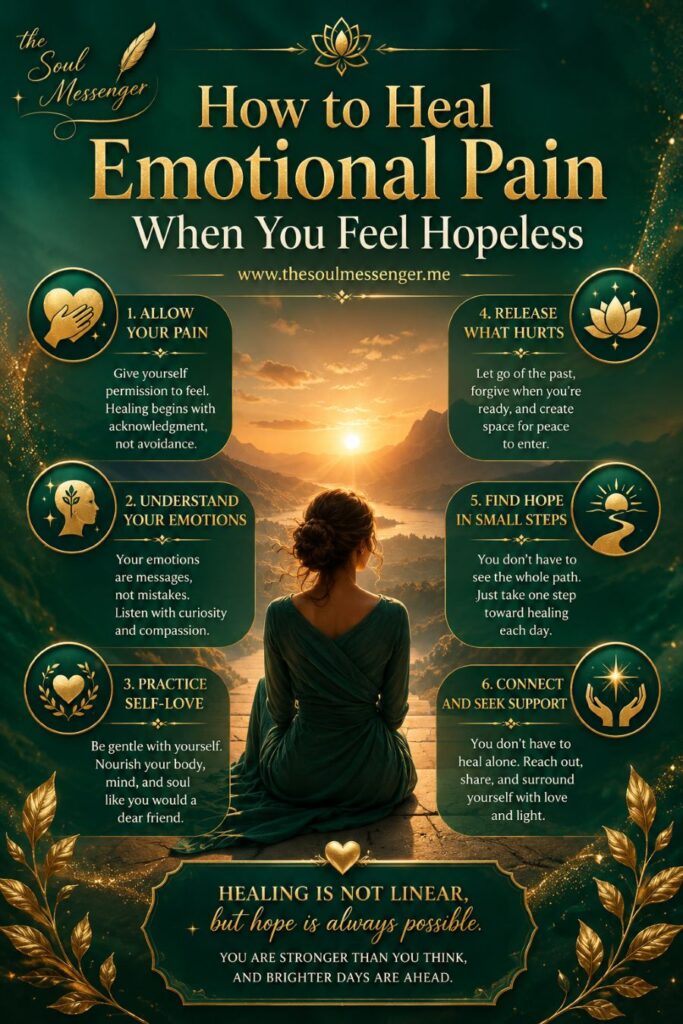
The first step in learning to heal emotional pain is understanding that hopelessness is not a final truth—it is an emotional response. It often appears when your nervous system is overloaded, when your inner world has been under stress for too long, or when you feel unsupported in your experiences. This article will guide you through practical, grounded ways to begin healing, even if you don’t feel ready or strong enough right now.
How to heal emotional pain when you feel hopeless: understanding the root
To heal emotional pain when you feel hopeless, it is important to understand what is happening beneath the surface. Hopelessness is often a signal, not a conclusion. It may come from unresolved grief, emotional exhaustion, chronic stress, or repeated emotional wounds that were never fully processed.
When emotional pain accumulates, the mind begins to protect itself by shutting down hope. This is a defense mechanism—it reduces emotional risk by convincing you that nothing will change. But this belief, while powerful, is not permanent.
Begin by observing your emotional state without judgment. Ask yourself gently: What am I actually feeling beneath this hopelessness? Is it sadness, fear, disappointment, loneliness, or exhaustion? Naming emotions reduces their intensity and helps you separate who you are from what you feel.
Another key part of healing is recognizing that emotional pain often lives in the body, not just the mind. Tightness in the chest, fatigue, or restlessness are physical expressions of emotional overload. Supporting your body is just as important as working with your thoughts.
When you start to see hopelessness as a temporary emotional state rather than a truth about your life, you create space for healing to begin.
Heal emotional pain: practical grounding techniques when hopeless
When you are actively trying to heal emotional pain, especially during hopeless moments, grounding techniques can bring your nervous system back into balance. These practices are not about forcing positivity—they are about stabilizing your inner world so healing becomes possible.
Start with your breath. Slow, intentional breathing signals safety to your nervous system. Try inhaling for four seconds, holding for four, and exhaling for six. This rhythm helps reduce emotional intensity and creates a sense of internal space.
Next, engage your senses. Look around and identify five things you can see, four you can touch, three you can hear, two you can smell, and one you can taste. This technique gently pulls your awareness out of overwhelming thoughts and into the present moment.
Movement is also essential. Even small actions like stretching, walking slowly, or shaking out your hands help release stored emotional tension. Emotional pain often becomes stuck energy, and movement allows it to flow.
Another powerful practice is self-validation. Instead of fighting your feelings, acknowledge them: “This is hard right now. I feel overwhelmed, and that makes sense.” Validation reduces internal conflict, which is often what intensifies emotional suffering.
Finally, limit emotional isolation. Even if you don’t feel like talking, being around safe people or environments can reduce the intensity of hopelessness. Healing does not require perfect connection—just small reminders that you are not alone.
Building emotional resilience to continue healing
To truly heal emotional pain, consistency matters more than intensity. Small daily actions create emotional resilience over time. Start by building simple routines that support stability: regular sleep, hydration, and moments of quiet reflection.
Journaling can also be a powerful tool. Writing down thoughts helps you externalize emotional pain instead of carrying it internally. You don’t need perfect sentences—just honesty.
It is also important to challenge hopeless thoughts gently. Instead of arguing with them, ask: Is this 100% true, or is this how I feel right now? This creates mental flexibility without forcing denial.
Another important part of resilience is self-compassion. Speak to yourself as you would speak to someone you deeply care about. Emotional healing accelerates when inner criticism is replaced with understanding.
Creating meaning while you heal emotional pain
Even in hopelessness, meaning can slowly be rebuilt. You don’t need to feel motivated to take small steps toward things that matter to you. Listening to music, caring for a pet, spending time in nature, or engaging in simple creative expression can reconnect you with life.
Meaning is not something you wait for—it is something you gently rebuild through action, even in small fragments.
Conclusion: healing is not linear, but it is possible
To heal emotional pain when you feel hopeless is not about eliminating pain instantly, but about learning how to stay with yourself through it. Emotional healing is gradual, often invisible at first, and deeply personal.
Some days will feel heavier than others, but each small act of awareness, grounding, and self-support builds inner strength. Hopelessness may visit, but it does not define your future. With time, patience, and gentle practice, emotional pain can soften, and a sense of inner stability can return.
You are not required to rush the process—just to stay open to the possibility that healing is still happening, even when you cannot yet feel it.